
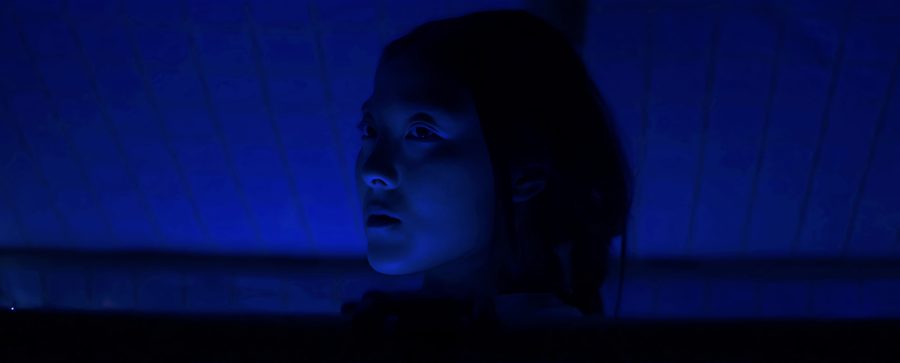
Exclusive Interview with Andrew Sullivan and Geoffrey Orthwein
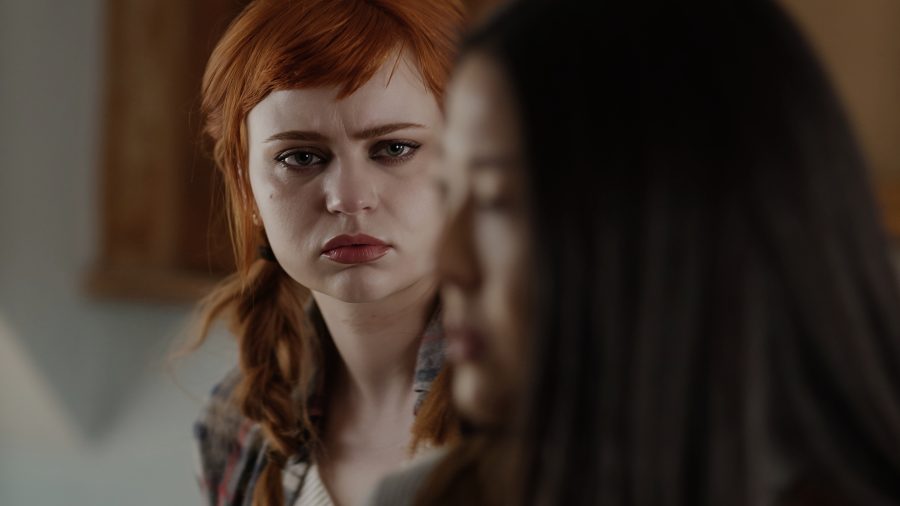
Vampires in literature and in film have always been multifaceted creatures. While some famous figures are revered for their vicious tendencies to drain blood and corrupt innocent souls, others have been utilized as analogies for lust and unconventional romance. At their core, vampires are a dichotomy; appearing and even behaving human, while possessing supernatural abilities that innately others them from society. Writer/director Andrew Sullivan and producer Geoffrey Orthwein showcase the impact of this unique alienation in their striking film, I Don’t Want to Drink Your Blood Anymore. The film had its world premiere at the 35th Philadelphia Film Festival and stars Nick Sagar of The Princess Switch series, former Disney Channel star Sierra McCormick, and actress and singer Miki Ishikawa.
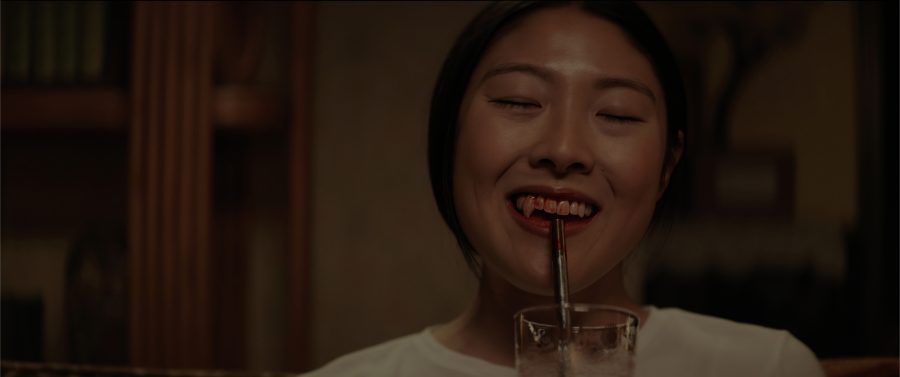
Ishikawa shines as Eiko, a young vampire who suffers from agoraphobia due to a traumatic incident that resulted in her vampiric transformation and the death of her family. The film utilizes Eiko’s family home as not just the primary setting, but as a foundation that breeds an enveloping amalgamation of her grief, trauma, and isolation. Taking inspiration from the COVID-19 pandemic, and experimenting with the idea of a vampire who rejects, but cannot escape, their immortal form, I Don’t Want to Drink Your Blood Anymore harnesses dread in every frame.
Q. How did you go about combining influences of vampire film and literature and Japanese culture?
A. Andrew: Japan is fundamental to world horror, so it felt natural to bring those two worlds together. Visually, I was inspired by postwar Japanese photographers Nobuyoshi Araki, Eikoh Hosoe, and Shomei Tomatsu. Their work captured the look and feel I wanted: intimate, shadowed, and a little haunted. But the bigger influence was family. Eiko comes from a Japanese American family where tradition, and passing it down from one generation to the next, is everything. Her grandmother was taken from her home and sent to an internment camp, something most of us can’t begin to understand. That history shapes Eiko. She believes home is the one thing no one can ever take from her family again, so she never leaves.
Every day she stands at the family shrine to give thanks to those who came before her, but over the years the ritual empties out. She goes through the motions and sees only loss and isolation. Classic vampire lore is about appetite, seduction, and power, and [the character of] Douglas carries all of that. Eiko is the opposite. [She has] one fang, no appetite for the eternity she’s been given. [She’s] holding on, to hold on, while everything else slips away. In addition to our own research, we worked with the Japanese Cultural and Community Center of Northern California, who reviewed the screenplay, gave us notes, and talked through what felt authentic and appropriate.
Q. Time plays a huge role in the film. How important was it to incorporate time as a central theme?
A. Andrew: Vampires are eternal. Their stories go on forever, even if we mere mortals don’t think that way. Over five decades, everything changes around Eiko while she’s stuck on wash, rinse, repeat, unsure how to break out of it, or whether she even wants to. She never makes one big decision to waste her life; she makes a small decision every day not to live it, and the nights start to blur into years, the years into decades.
When you’re covering that much time, you need a consistent way to measure it, and it shouldn’t be a clock; that’s too obvious. In Back to the Future, it’s the DeLorean. In our film, it’s the shrine. As the years go by, more pictures of strangers are added to it. What began as a beautiful memorial to Eiko’s family slowly becomes a haunting reminder of her body count.
Q. You said that the film was inspired by the COVID-19 pandemic. Talk about how you captured the dread and isolation of that period within the film.
A. Andrew: A lot of us lived the same strange experience during lockdown. We didn’t want to see our own faces on video calls. We didn’t want the food in our kitchens. We weren’t sure if it was 10 am, Wednesday, or May. We confused day and night. We stayed away from strangers and friends, and we lost track not just of time, but of time itself. I think many of us felt a little less human. In a way, we were all reluctant vampires trapped in our homes. That became the premise: a fifty-year coming-of-age story about the most reluctant vampire.
Eiko’s body is frozen forever, and her grief keeps her mind frozen too. She loses her family and removes herself from the world, but the world won’t leave her alone. To capture that isolation, I wanted the audience to feel the empty space around her. In every room, you should sense where her family would be sitting if they were still alive. We also drained light from the rooms over time. At a certain point, keeping things up no longer matters to Eiko. She’s still fighting to hold on to her humanity, but only at the edges.
Q. A lot of the set pieces in the film are very impressive, such as Eiko’s coffin bed. Were there any challenges in the design process of these pieces?
A. Geoffrey: In addition to the physical set design, a key challenge was communicating the passing of decades. We could use titles on screen, of course, and there’s nothing wrong with that, but since Eiko has such a misunderstanding of time itself, we wanted to find a more cinematic way of expressing that. We have mile markers along the way [with] calendars, phone books, and CD covers, but her TV watching let us create the glitching effect. That is how the audience experiences Eiko’s loss of time. The viewer’s experience is sometimes as disjointed as Eiko’s own perception. Finding the right balance of a disjointed experience, but not a confusing one, was a big editorial challenge.
Q. What do you want audiences to walk away with from this film? How does the film illustrate that message?
A. Geoffrey: The film is a meditation on how a solitary existence still impacts the world. We have a responsibility not just to ourselves but to society in how we operate. Eiko wants to be a good human, but ignoring her vampire reality only causes her pain. She has to confront her own demons to have a chance at redemption. It is only when she finally accepts her own failings that she can finally be who she wants to be, but ignoring that for so long has severe consequences.