The horror/comedy genre, though seemingly disparate in their tones, have always had the potential to effortlessly blend together. The structural similarity, and careful craft of tension allow the two forms to come together to create a truly unique experience. Recently, with films like Bodies Bodies Bodies in 2022, and Leviticus which came out this year, queer elements have found horror/comedy to be a poignant and cathartic way of dissecting what it means to be queer in the modern world. Trans lesbian filmmaker Kaye Adelaide brilliantly represents this avenue of queer cinema with her horror/comedy/mockumentary The Rebrand.
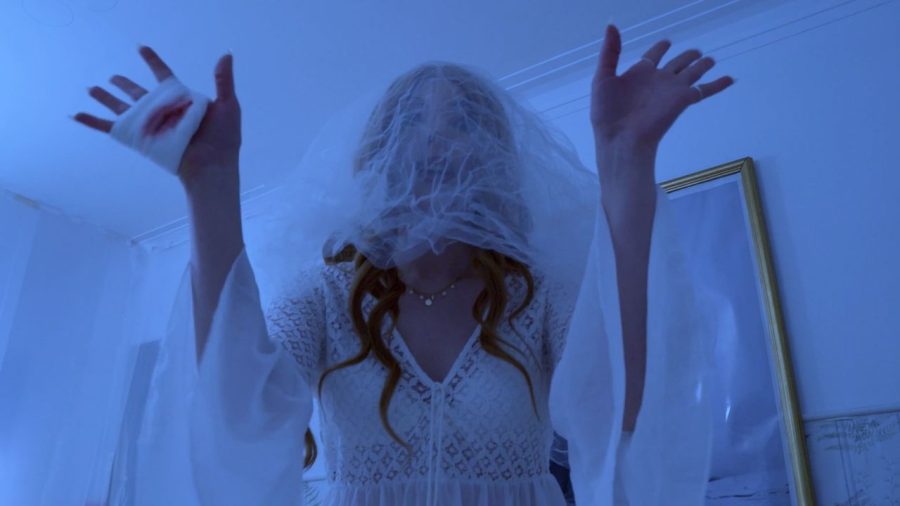
Nancy Webb in The Rebrand
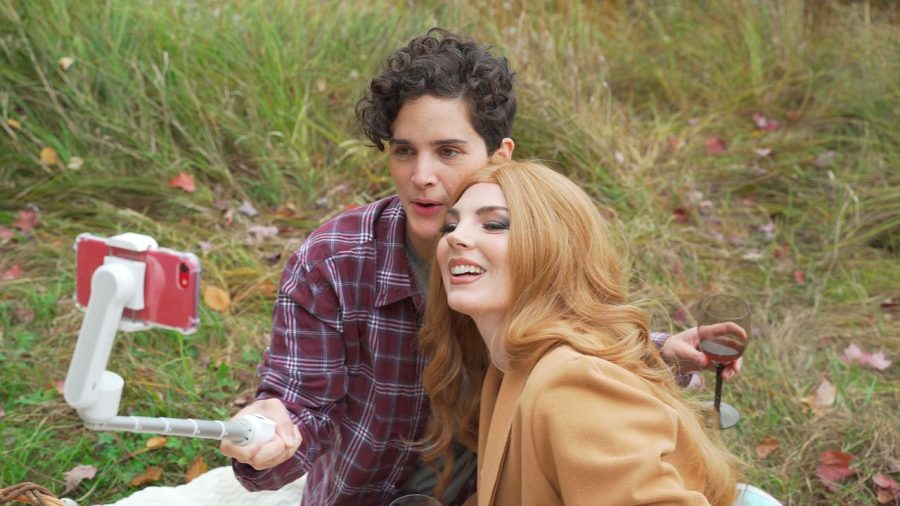
The film, which has been the recipient of multiple Best Feature Film awards within the film festival sphere, follows an eight-month pregnant videographer named Nicole who is tasked with helping a lesbian influencer couple reinvent their image after a cancellation. What begins as a simple job descends into a strange and terrifying ordeal that will have audiences holding their breath. Through Adelaide’s directorial instincts and chilling performances from an all queer cast, The Rebrand utilizes the best conventions of horror/comedy while also remaining inventive with its premise.
Q. The story of The Rebrand is very relevant as social media and influencers are such a major part of popular culture. How did you consider this when in the writing phases?
A. We did a lot of research on queer influencers, especially couple influencers, because I think we were very interested in the idea of people like commodifying their relationship. There’s always been famous relationships but it’s usually people who already have fame or power becoming a couple, but not people who grow to fame or popularity by saying “look at how special and interesting of a couple we are.” We did a lot of research, and we looked at a lot of like, unhinged, lesbian couple influencers. That was definitely a big inspiration as we were writing it.
Q. Talk about how you weaved horror elements into the mockumentary format within the film.
A. I think that right now found footage is kind of a dirty word, but I am always personally going to be a stan for found footage. I think it’s such an incredible and powerful format and that it has a lot of potential, but it got very oversaturated in a certain flavor of it, in a certain era. I think that it’s really exciting to look at where that can go. I think that this is absolutely a mockumentary. It very much plays in the same realm as like a Christopher Guest movie, where it’s like comedians being very funny, and it’s filmed in the format of a documentary, but it does, at some point, it does cross over into the realm of found footage, when they’re running around in the basement and there’s a light on the camera lighting the scene and it’s in the darkness.
So, I think it’s kind of a specific blend of mockumentary and found footage that is not very common and hasn’t been done very many times. I think why a lot of people have connected with the film is because it’s kind of a unique mix of being very funny, but then also not just being a mockumentary. There’s also this horror layer that we tried to very much weave throughout, and not very much feels like it comes out of nowhere in the third act.
Q. How did you go about beginning the scope of the film with a comedic approach before diving into the more sinister moments?
A. Yeah, I think a big guiding principle for the film was making everything funny. I think we tried to pepper the scares throughout and obviously they come the most in the climax, but they are a bit throughout. I think a main principle was to think sometimes not whether or not something makes sense or is it logical, but is it funny? If it’s funny then let’s do it, if it’s not then let’s not, if it’s the more logical, structural thing to do. We really took an approach with the horror where we tried to build tension higher and higher and higher and then when it hits the breaking point of the tension, there’s a joke right after. So, you kind of have this experience of holding your breath and then letting it out in a big laugh.
That’s one of the things I really love about horror comedy is that both horror and comedy make you physically react to the film. Like a drama may occasionally make you cry, but maybe once in the whole film where as with horror and comedy you’re more physically engaged with the film because you’re laughing, and you’re screaming, and you’re jumping at the jumpscares. I really like that because I find it very cathartic and it lets out a lot of tension that you’re building.
Q. Can you share some of your favorite horror movies? Were their ones that you looked to specifically when making this film?
A. Well, my all time favorite movie is Evil Dead II, specifically the second one in the original trilogy. I find the first one tries to be too scary, the third one tries to be too funny, but the second one is the perfect Goldilocks mix of actually very funny and actually very scary at the same time. I do love all the films, but the one that speaks to me the most personally is the second one because it’s very unique and stands on its own and I don’t think it’s ever been fully replicated by [Sam] Raimi himself. I also love a lot of John Carpenter films and I think a big inspiration for this were a couple of specific found footage films. One of which being Creep, the Mark Duplass and Patrick Rice movie, which I think was very brilliant in its choice to make the camera operator, the videographer, the one in peril which is less common in a lot of found footage [movies].
Of course, we see that in The Blair Witch Project, which was definitely always an influence in anything in the realm of found footage. Also the film Be My Cat: A Film for Anne which is a Romanian film that I found inspired me so much because it was essentially made by one person. It was just this one guy with his camera and working with a few actors, but ultimately he did all the shooting, all the editing, all the everything, and it was very inspiring to see how you can have no money and no crew and you can still make something so impactful.
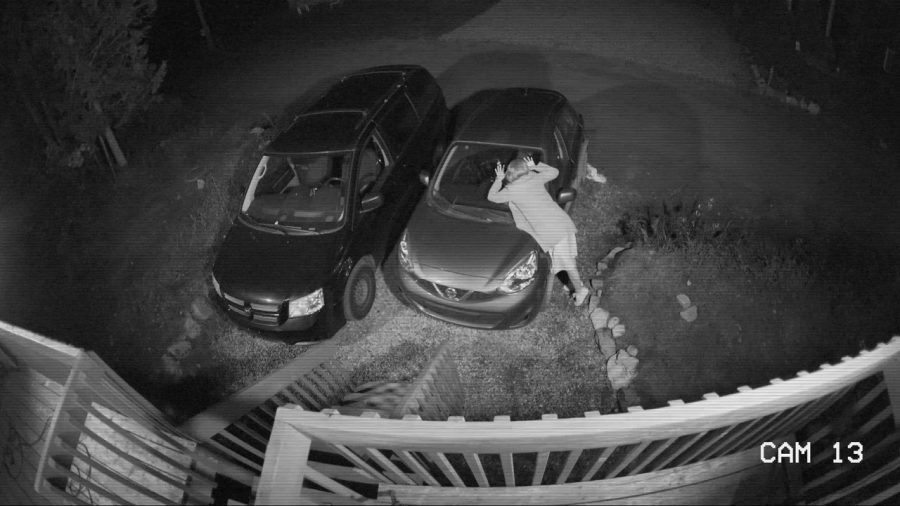
Security Footage Still from The Rebrand
Q. What are some films within the sphere of queer cinema that speak to you as an artist?
A. I love a lot of 90s new queer cinema films. I love Bound and But I’m a cheerleader. I absolutely love a lot of the modern trans filmmakers working now like Alice Maio Mackay and Jane Schoenbrun. I think as far as inspirations, I haven’t seen a lot of queer horror comedy in the history of cinema and I’d really like that to change. I think some of the filmmakers I mentioned have dipped into that into the last few years, but I can’t really point to specific examples from a more historical perspective from when I was growing up, or that I’ve become a big fan of that are a blend of horror and comedy, but are also queer. So, I think that might be part of what helps the film stay unique is I didn’t have a lot to accidentally mimic too closely because it’s sort of new territory.
Q. A lot of recent horror/thriller films are utilizing queer elements to display the queer experience. Can you talk about how that is helping artists explore their journey?
A. I think horror is a genre very much steeped in camp, which has been a genre kind of always owned by the queers, and I think there’s always been queer elements to horror even if it’s subtextual or even in just vibe or format. I think that the wave of more recently explicitly queer horror film probably has to do with most of us have quite a bit of anxiety and or trauma and that the world of horror cinema is kind of a safe way to explore your anxieties and traumas and then kind of have it released at the end when the film ends. A lot of us are drawn to seeking these intense experiences that kind of give us some reassurance that our anxieties and traumas are survivable. You can watch something very difficult and upsetting but then come out seeing a hero come out the other side and be ok and feel inspired by that or at least realize that when it ends, “Oh, I’m ok, that was just a movie.” I think kind of the horrors in queer cinema kind of reflect the horrors in queer experiences that are mounting in the world right now.
The Rebrand is now VOD streaming.